Register on the National Portal
Sign up at pmsuryaghar.gov.in with your state, DISCOM, consumer number and mobile; verify with an Aadhaar-linked OTP.
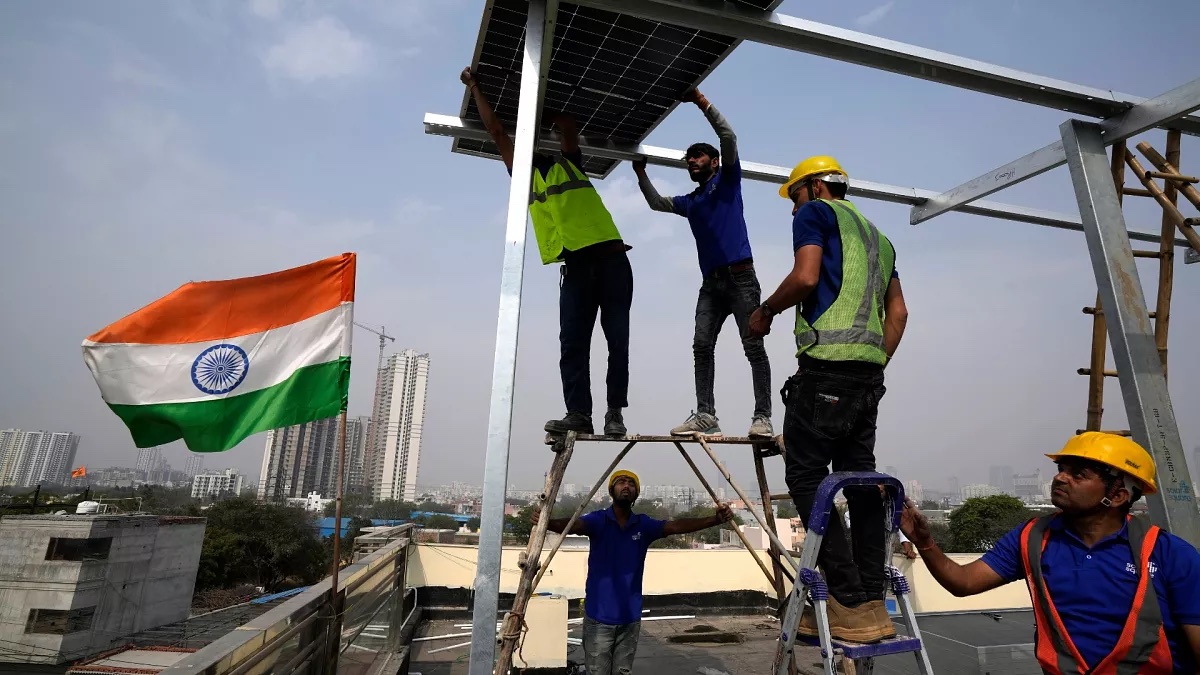
Reduce your electricity bill by up to 90% — and let us file the whole application for you.
Unlock my solar subsidy Up to ₹78,000 central subsidy
 Paid straight to your bank (DBT)
 Bills down by up to 90%
Launched in February 2024 with an outlay of ₹75,021 crore to make clean energy affordable for homeowners. The scheme aims to put rooftop solar on one crore homes and give each of them up to 300 units of free electricity a month. Eligible households receive up to ₹78,000 as a direct subsidy for installing a rooftop system — cutting grid dependence and monthly bills.
The subsidy is transferred directly to your bank account through Direct Benefit Transfer (DBT) after successful installation and commissioning.

 73.7 lakhApplications received
 ₹26k CrSubsidy released
 13.35 GWInstallation capacity
 37.3 lakhInstallations completed
 45.1 lakhHouseholds covered
*Indicative figures from the National Portal dashboard; they change daily and do not represent your savings, which depend on your roof and bill.
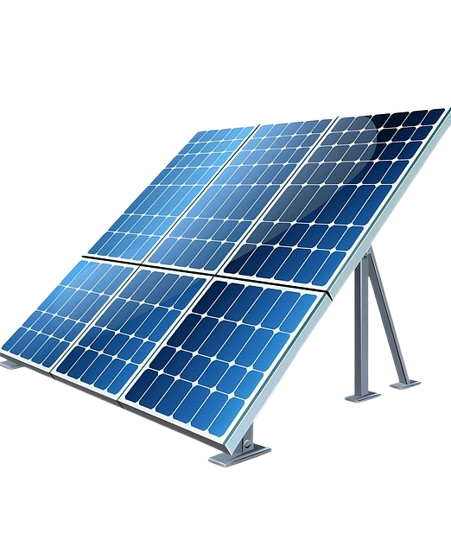
The subsidy depends on the size of your rooftop solar system, with a maximum benefit of ₹78,000 for systems of 3 kW or above. Housing societies and RWAs get ₹18,000 per kW on common-facility systems, up to 500 kW.
Some states add a top-up — Uttar Pradesh, for example, adds up to ₹30,000. We confirm your DISCOM’s current top-up at the survey.
| Solar system size | Government subsidy (₹) |
|---|---|
| 1 kW | ₹30,000 |
| 2 kW | ₹60,000 |
| 3 kW | ₹78,000 |
| 4 kW | ₹78,000 |
| 5 kW | ₹78,000 |
| 10 kW | ₹78,000 |
| Housing society / RWA | ₹18,000 per kW · up to 500 kW |
 Aadhaar card
 Latest electricity bill
 Bank account details
 Roof ownership / roof-rights proof
 Passport-size photo
Sign up at pmsuryaghar.gov.in with your state, DISCOM, consumer number and mobile; verify with an Aadhaar-linked OTP.
Submit your roof details and the system size you want. We survey your roof first so you apply for the right size.
Select an MNRE / National Portal registered installer — like AmPrisia — for the site survey, design and installation.
We install with DCR-compliant, ALMM-listed modules and certified inverters and structures — the components the scheme requires.
Your DISCOM inspects the installation and fits a bidirectional (net) meter so exported power is credited.
We upload the commissioning report and your bank details on the portal — this is what triggers the subsidy.
The central subsidy is transferred to your account, typically within 30–45 days of commissioning.
After logging in at pmsuryaghar.gov.in you can follow your application at every stage — from registration and feasibility approval to installation, inspection and subsidy credit. We keep you posted at each step as well.
Open the National PortalMake an informed decision — the five factors every homeowner should check before installing rooftop solar.
One accountable team handles the subsidy, the installation and 25 years of service.
Application, start to finishWe register you, file the application, upload the commissioning certificate and chase the DISCOM — you only sign. Subsidy-eligible componentsDCR-compliant, ALMM-listed modules and certified inverters, so the portal’s checks pass first time.
 Right-sized, not over-soldA free survey and shadow study decide the size — never a bigger system than your bill justifies.
 Finance that fitsHelp with collateral-free solar loans; once the subsidy lands it offsets the principal and your EMI drops.
It is the Government of India’s flagship rooftop solar scheme, launched in February 2024. Eligible households get a central subsidy of up to ₹78,000, paid directly into their bank account after the system is installed and commissioned.
The household subsidy is meant for homes with their own roof. Flat owners cannot apply individually, but a housing society or RWA can apply for a shared system on common facilities (lifts, pumps, lighting) at ₹18,000 per kW, subject to DISCOM rules.
Typically 30–45 days after the commissioning certificate is uploaded on the National Portal. Timelines vary a little by state and DISCOM.
Yes. Nationalised banks and NBFCs offer collateral-free solar loans at concessional rates for systems up to 3 kW. Once the subsidy is credited it is adjusted against the loan principal, which brings your EMI down.
Rejections are usually down to a wrong consumer number, a name or document mismatch, a technical feasibility issue or a sanctioned-load condition. We pre-check every application before it goes in, and if anything is flagged we fix it and resubmit for you.
No. The subsidy is a direct benefit transfer and is not treated as taxable income for residential households under current rules.
Only modules on MNRE’s Approved List of Models and Manufacturers (ALMM) that meet the Domestic Content Requirement (DCR). Every system we install under the scheme uses DCR-compliant, ALMM-listed modules.
Households that don’t need the subsidy can choose to forgo it on the portal and still install through the scheme’s net-metering route. Some people do this to skip the subsidy paperwork.
Generally until the vendor is finalised and work begins. We flag this decision point clearly before anything is locked in.
The vendor. We enter the installation and commissioning data on the National Portal on your behalf and keep you posted at each stage.
Shared systems for common facilities are generally allowed up to 500 kW collectively (calculated at 3 kW per flat), based on DISCOM norms.
Households: up to ₹78,000 for a 3 kW or larger system. RWAs and group housing societies: ₹18,000 per kW on common-facility systems, up to 500 kW.
Yes, usually before the DISCOM’s feasibility approval, through a modification request on the portal. We handle the change if your survey suggests a different size.
Yes. Financing options exist for both categories, and we help you compare them against a straight purchase.
Yes. The portal checks the ALMM/DCR status of the cells and modules before the subsidy is released — which is why using the right components matters.
Most rejections are avoidable: keep your name and details identical across Aadhaar, electricity bill and bank records; use the correct consumer number and DISCOM; make sure the installer is registered on the portal; and give an accurate, Aadhaar-linked bank account.
Get a free site assessment and subsidy estimate — no commitment required.
Talk to a solar expert
Share your details and we’ll check your eligibility, size the system and tell you the exact subsidy you qualify for.
What happens next